Across the laser industry, many manufacturers face rising costs and unstable supply chains.
At the same time, customers expect higher output power, longer uptime, and better reliability.
Meeting all three goals depends less on the laser head itself — and more on the pump source behind it.
A stable, efficient diode pump sets the real ceiling for power, lifetime, and cost.
When the pump performs well, the entire system runs cooler, cleaner, and more consistently.
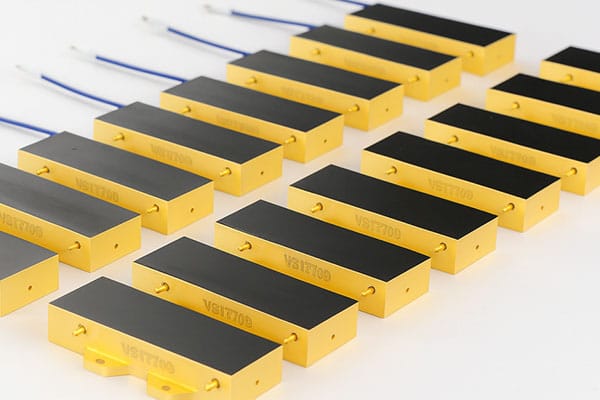
Based in China, we work closely with global laser makers who build solid-state and DPSS systems.
This post looks at how pump technology defines laser performance, where the main design trends are heading, and why 793 nm pumps have become a key focus for OEMs worldwide.
What is a solid-state laser1, and why does the pump matter so much?
The first laser ever built — Theodore Maiman’s ruby laser in 1960 — was a solid-state design.
It proved that a small crystal could turn light into a coherent beam.
That same idea still powers today’s most advanced tools in medicine, industry, and research.
A solid-state laser1 stores energy in a doped crystal or glass.
The pump excites the ions in that material, and the resonator converts the energy into a focused beam.
If the pump wavelength2 aligns with the absorption band of the crystal, efficiency and stability improve dramatically.
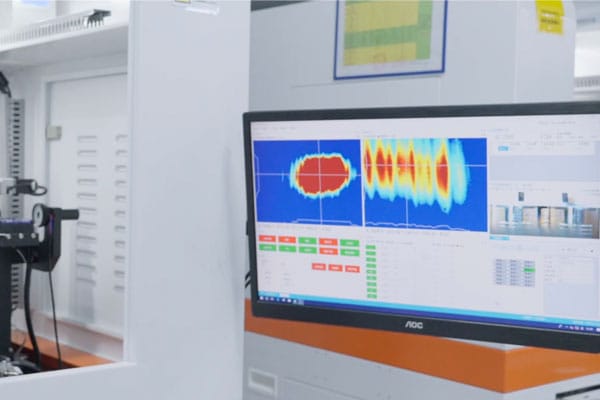
A typical solid-state head includes a gain medium, a pump source, a focusing chamber, a resonator, and a cooling system.
The pump plays the central role.
When its spectrum drifts, heat builds up and output drops.
Flashlamp pumping was common decades ago, but diode pumping has taken over thanks to better efficiency, smaller size, and longer lifetime.
Today, a well-matched diode pump defines the real quality and performance of any solid-state laser1.
Which solid-state laser types rely on diode pumping1?
Different gain media require different pump wavelengths.
Ruby (Cr:Al₂O₃) was the first, but its high threshold limited use.
Nd:YAG2 (Nd³⁺:YAG) became a workhorse for industrial cutting, marking, and medical applications.
Ti:Sapphire added wide tunability and ultrafast pulses for scientific research.
Modern DPSS and medical systems favor wavelengths that reduce heat — typically 878.6–888 nm for UV DPSS lasers, and 793 nm for thulium-doped solid-state systems.
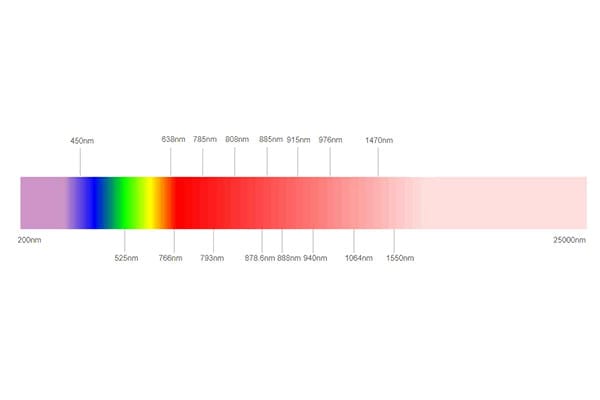
| Medium | Typical Pump | Why It Matters |
|---|---|---|
| Nd:YAG2 1064→532/355 | 878.6–888 nm | Less heat, higher UV efficiency |
| Nd:YVO₄ | 878.6–888 nm (locked) | Narrow spectrum, stable overlap |
| Ti:Sapphire | 532 nm | High power, ultrafast pulses |
| Tm:YAG / Tm:YLF | 793 nm | Efficient thulium pumping |
Choosing the right pump wavelength reduces thermal distortion and improves beam quality.
It also simplifies maintenance, since modular diode pumps can be replaced quickly and tracked with serial data for consistency.
How does diode pumping improve daily performance and cost?
Lamp-pumped lasers work, but they waste energy and produce excess heat.
Diode pumping solved both problems.
Diode pumps deliver light with a narrow spectrum3, close to the crystal’s absorption peak.
This design increases optical efficiency, reduces heat, and extends lifetime — all while lowering service costs.
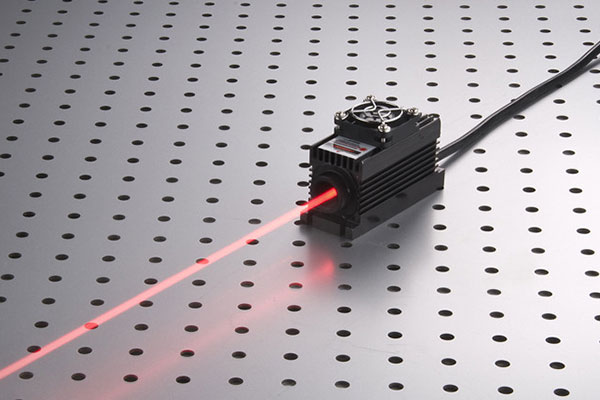
Each diode module defines its center wavelength, spectral width, and fiber geometry (usually 105 µm or 200 µm at NA 0.22).
Many modules use an external cavity or a volume Bragg grating (VBG) to lock the wavelength, keeping it stable as temperature or current changes.
Even a one-nanometer drift can lower absorption and raise thermal load, so stability is critical.
Front-swap mechanical designs make service fast.
QR-linked burn-in data gives engineers full visibility on lifetime and performance.
Together, these improvements make diode-pumped solid-state lasers4 predictable, efficient, and easy to maintain — key advantages for any OEM line.
Where is pump source technology heading?
OEMs now want more than just higher power.
They ask for tighter wavelength control, better thermal behavior, and simpler integration.
In short, they want modules that lock fast, run cool, and stay stable for years.
Next-generation pump designs focus on higher electro-optical efficiency[^7], narrow spectral width, robust thermal paths, and reliable anti-feedback structures.
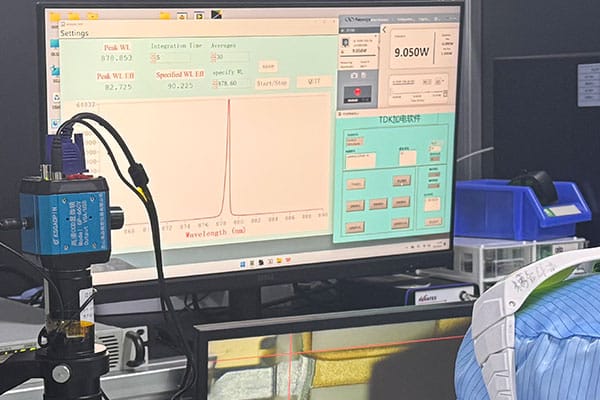
New GaAs chips push efficiency higher.
Improved submounts and solder layers shorten the thermal path and reduce stress.
VBG-locked modules maintain a fixed wavelength across a broad temperature range.
Integrated sensors for power and temperature offer early warning before failures occur.
Standardized fibers and keyed connectors make installation quick and repeatable.
When these elements come together, manufacturers see faster production, fewer field returns, and better uptime for end users.
| Focus | Typical Target | Why It Matters |
|---|---|---|
| Wavelength Lock | ±0.5 nm | Ensures peak absorption |
| Spectral Width | <2 nm | Reduces heat load |
| Fiber Geometry | 105 / 200 µm NA 0.22 | Simplifies integration |
| Reliability | <1% long-term failure | Improves uptime |
| Service | Front-swap, QR trace | Speeds maintenance |
Why 793 nm pump5 sources are drawing more attention
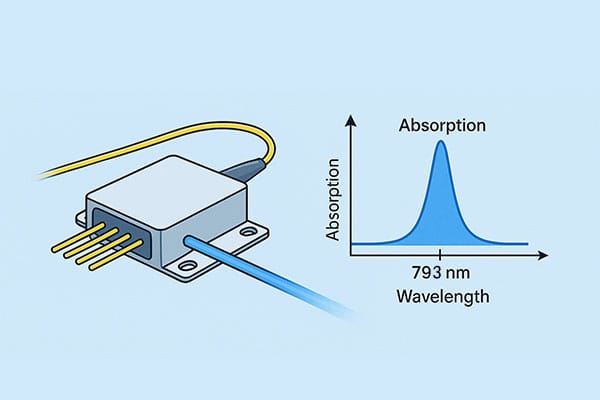
Thulium-based lasers depend on 793 nm pump5 diodes.
These systems power many medical, aesthetic, and mid-infrared applications.
A well-tuned 793 nm pump5 provides strong absorption, minimal heat, and reliable long-term operation — exactly what OEMs need for continuous-duty systems.
For laser makers, a stable 793 nm pump5 means higher efficiency, cleaner beams, and lower service costs.
A view from China: how 活力激光 supports this shift
Based in Shenzhen, 活力激光 develops and produces solid-state 半导体激光泵浦源s for global OEMs.
We focus on 793 nm diode pumps for thulium-doped lasers and locked 878.6 / 885 / 888 nm modules for UV DPSS systems.
Our approach is simple: precise wavelength control, narrow spectra, and reliable thermal design.
All modules use standard 105 µm or 200 µm fibers (NA 0.22) for easy integration and field replacement.
Each carries full burn-in data and serial traceability for quality management.
We also keep safety stock and short lead times to support fast production schedules.
活力激光’s role in the global supply chain is not about cost alone — it is about reliability, data transparency, and practical design that meets OEM needs across markets.
Conclusion
The global laser industry is evolving toward higher precision and better reliability.
Solid-state laser performance starts — and often ends — with the pump.
活力激光 supports this progress by providing solid-state 半导体激光泵浦源s, including 793 nm modules for thulium systems and locked 878.6–888 nm pumps for UV DPSS.
By focusing on stability, wavelength accuracy, and consistent supply, we help OEMs build stronger, more dependable laser products.
了解更多 at www.120.55.38.228 or reach us at info@120.55.38.228.
-
Explore this link to understand the fundamentals of solid-state lasers and their applications in various fields. ↩ ↩ ↩ ↩
-
Learn about the significance of pump wavelength in enhancing the efficiency and stability of solid-state lasers. ↩ ↩ ↩
-
Explore how narrow spectrum light from diode pumps enhances efficiency and performance in laser applications. ↩
-
Learn about the advantages of diode-pumped solid-state lasers for improved efficiency and maintenance in various applications. ↩
-
Understanding electro-optical efficiency is crucial for optimizing pump designs and improving performance. ↩ ↩ ↩ ↩