In composite manufacturing, heating has always been a bottleneck. As industries like aerospace, automotive, energy storage, and hydrogen fuel rapidly expand, carbon fiber processing is evolving toward greater complexity and higher precision. Manufacturers now face diverse requirements:
- Single-tow and multi-tow thermoplastic placement
- Curved and saddle-shaped surface layups
- High-pressure thermoplastic vessel winding
- Complex pipe winding at 90° or 55° angles
- Spherical and dome-shaped composite structures
Traditional heating methods—hot plates, infrared lamps, or hot air blowers—struggle in these scenarios. They deliver broad, inefficient heat with slow response times, high energy loss, and poor adaptability.
The solution lies in semiconductor laser heating systems, which bring precision, responsiveness, and flexibility to composite processing.
Why Heating Is Critical in Carbon Fiber Processing
Every step in thermoplastic composite placement or winding depends on proper heating. Without it, high-strength carbon fiber cannot be consolidated into a defect-free part.
- Resin softening[^1]1: Heat transforms rigid thermoplastic resins (like PEEK or PPS) into a softened, flowable state for bonding.
- Interlayer fusion: Consistent heating ensures adhesion between fiber layers, preventing voids or delamination.
- Geometry conformance: Heat allows fiber tapes to conform to 3D shapes such as pipes, domes, and saddles.
- Final part quality[^2]2: Controlled heating leads to strong bonding, reduced porosity, and long-term durability.
| Material System | Typical Heating Temp | Role of Heating |
|---|---|---|
| PEEK, PPS (CF/PEEK) | 300°C–400°C | Softening and interlayer bonding |
| GF/PP composites | 160°C–220°C | Pipe winding and bonding |
| Prepreg thermosets | 120°C–180°C | Resin curing and cross-linking |
In short: without reliable heating, there is no reliable composite product.
The Unique Advantages of Semiconductor Laser Heating
Why does laser outperform traditional heating? The answer is precision, flexibility, and efficiency.
1. Localized and Uniform Heating
Laser beams can be focused onto millimeter-scale regions, heating only where needed. This eliminates the risk of overheating adjacent areas. Even on curved surfaces, laser energy maintains uniform distribution.
Benefit: Stronger bonding, fewer voids, consistent quality.
2. Fast Thermal Response and Energy Efficiency
Lasers deliver instant on/off control. Unlike hot plates or IR lamps that must preheat large areas, lasers waste no energy outside the target zone.
Benefit: Faster cycle times, lower energy costs, leaner operations.
3. Compact, Modular Design for Easy Integration
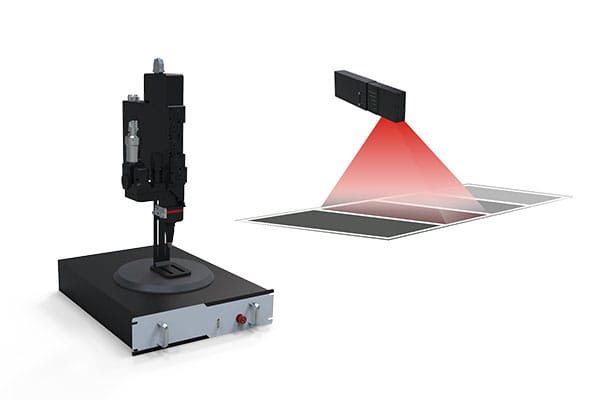
Semiconductor lasers are fiber-coupled and compact. They can be mounted directly onto robotic placement heads or winding machines without redesigning entire systems.
Benefit: Flexible retrofits, minimal space requirements, simple scaling from lab to production.
4. Programmable and Adaptive Control
Laser systems support full digital control of power, beam geometry, and angle. They can integrate with closed-loop sensors, ensuring precise thermal management.
Benefit: Adaptive heating profiles tuned to material type, layup speed, and geometry complexity.
5. Industrial-Grade Reliability
活力激光’s semiconductor lasers undergo shock, vibration, and thermal cycling tests, ensuring stable output in 24/7 production environments. With minimal moving parts, they require less maintenance than traditional systems.
Benefit: Long-term durability, reduced downtime, consistent throughput.
Real-World Applications
Laser heating systems are already empowering a wide range of carbon fiber processes:
- Single-tow CF/PEEK placement: High-precision lab-scale experiments and aerospace-grade parts.
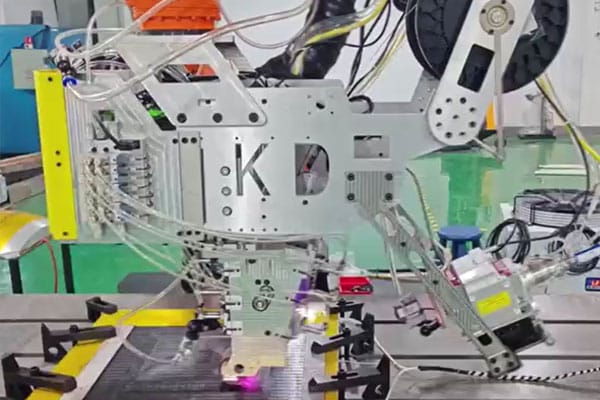
- Four-tow CF/PEEK placement: Efficient production-scale manufacturing.
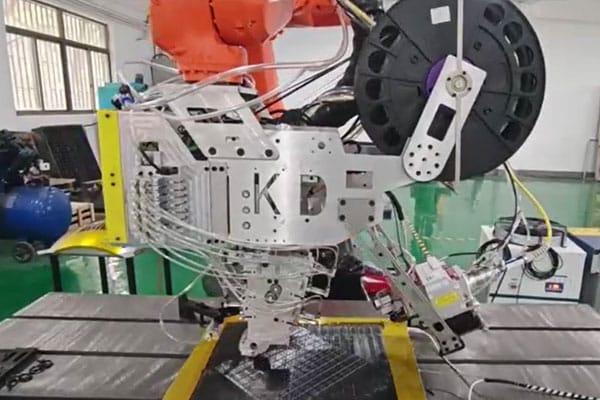
- Complex curved surfaces: Automated layups for irregular geometries without wrinkling.
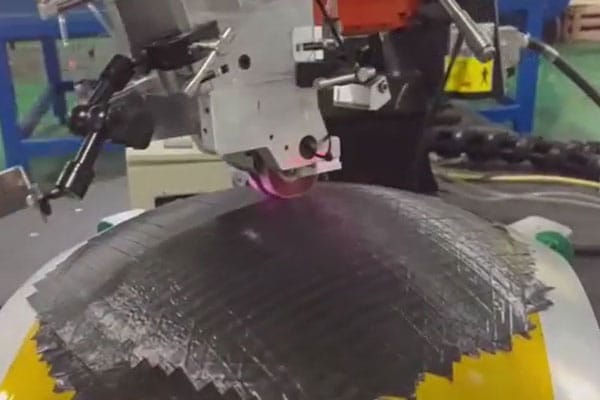
- GF/PP pipe winding (90° and 55°): Tailored reinforcement patterns for industrial and infrastructure applications.
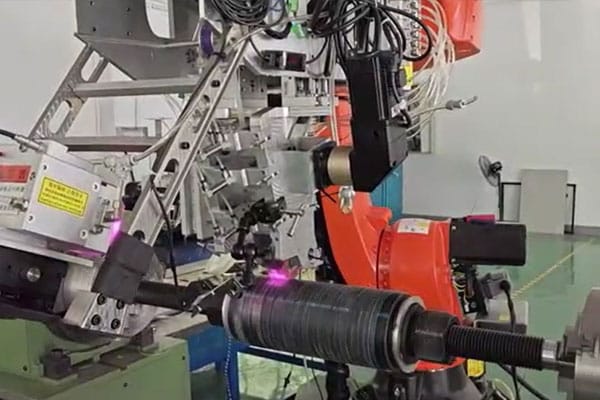
- Thermoplastic vessel winding: High-pressure hydrogen and CNG storage solutions.
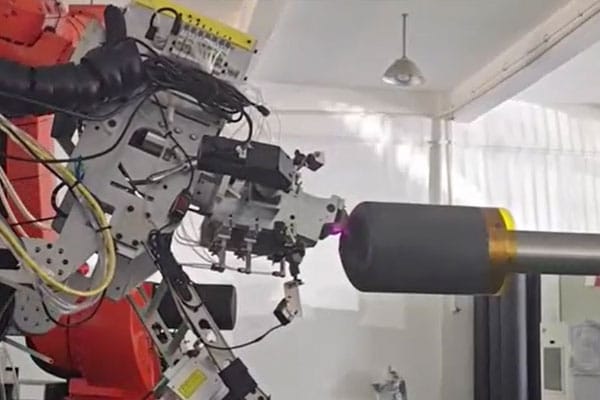
- Saddle and spherical structures: Critical for aerospace and defense-grade components.
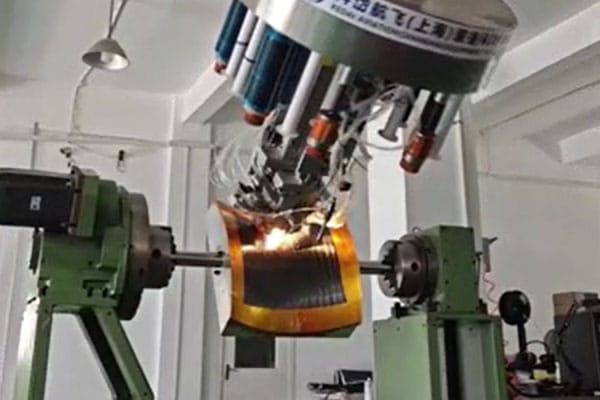
In each case, the common denominator is laser heating’s ability to provide stable, adaptable thermal input that traditional methods cannot match.
Industry-Wide Impact
Laser heating systems are more than just a new tool—they are reshaping the competitive landscape of composite manufacturing[^3]3.
- For Research Institutes: One system supports multiple processes, cutting equipment costs.
- Faster prototyping accelerates innovation.
For Equipment Manufacturers:
- Modular laser systems simplify machine design.
- Broader applicability reduces time-to-market.
For Composite Factories:
- Higher productivity and quality yield fewer rejects.
- Lower energy costs and maintenance improve ROI.
- Flexibility to handle diverse projects strengthens competitiveness.
With the rapid growth of hydrogen energy, aerospace, and lightweight automotive sectors, the influence of laser-based heating will only expand.
Traditional Heating vs. Laser Heating: A Direct Comparison
| Feature | Traditional Heating (Hot Plate / IR / Hot Air) | Laser Heating System (Semiconductor)4 |
|---|---|---|
| Heating Area | Broad, unfocused | Localized, targeted |
| Response Time | Slow (preheat required) | Instant on/off |
| Energy Efficiency | High loss to surroundings | Direct absorption, minimal loss |
| Adaptability | Limited | Programmable, closed-loop controlled |
| Integration | Bulky, heavy, space-intensive | Compact, fiber-delivered |
| Reliability | Frequent maintenance, degradation | Industrial-grade, 24/7 stable output |
Final Thoughts
Laser heating is not just an alternative—it is becoming the standard for advanced composite processing. By combining localized precision, efficiency, adaptability, and industrial durability, semiconductor laser heating systems are enabling processes that were once too slow, inconsistent, or costly.
If you are exploring next-generation composite solutions, 活力激光 provides industrial-grade semiconductor laser heating systems already deployed in multiple AFP and filament winding lines.
- Understanding resin softening is crucial for mastering carbon fiber processing, ensuring optimal bonding and part quality. ↩
- Exploring the impact of heating on final part quality can enhance your knowledge of composite durability and performance. ↩
- Discover the latest advancements in composite manufacturing and their impact on various industries. ↩
- Find out what 活力激光 can provide for the laser heating system. ↩
[^1]: Resin softening.
[^2]: Final part quality.
[^3]: Composite manufacturing.