Solid-state lasers often boast about power, wavelength, and processing results. But there’s one foundational question that many overlook: what crystal is actually amplifying the laser beam?
In solid-state lasers, the combination of pump source and gain crystal determines core performance. The wrong crystal choice, even with powerful pumping, can result in system instability.
Understanding this is key for engineers and procurement specialists. Let’s break down the major types of laser crystals used in industrial and scientific systems.
What Is a Laser Crystal?
Most people know lasers rely on a pump source, but fewer understand what actually amplifies the light inside the laser cavity.
In solid-state lasers, the crystal acts as an energy amplifier. It absorbs pump light and re-emits it as usable, intensified laser energy.
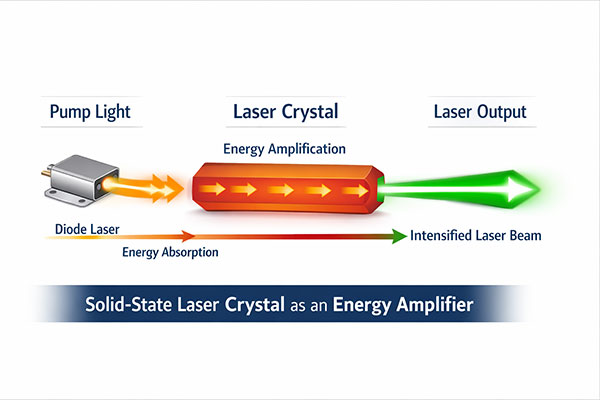
This basic structure remains the same:
Semiconductor pump → Gain crystal → Fundamental laser → Beam shaping or frequency conversion → Application
But different crystals have distinct absorption spectra1, gain efficiency, and thermal properties. These parameters directly affect:
- Compatible pump wavelengths
- Achievable output power
- Suitability for long-term industrial operation
Which Crystals Are Most Common in Industrial Lasers?
Different applications require different crystal properties. Let’s explore the most widely used types.
1. Nd:YAG2 – The Industrial Workhorse
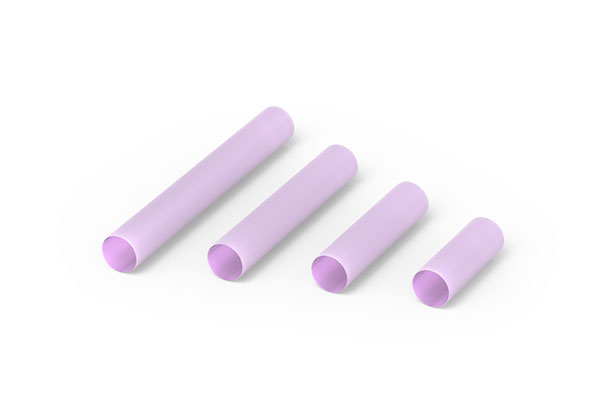
Nd:YAG2 (Neodymium-doped Yttrium Aluminum Garnet) is the standard laser crystal in industrial applications.
It has high thermal conductivity, strong mechanical strength, and mature manufacturing—ideal for demanding industrial use.
Typical Output:
- 1064 nm (infrared)
- 532 nm (green, after frequency doubling)
Main Applications:
- Metal marking
- Cutting of hard materials
- Diamond and gemstone processing
- DPSS laser systems for industry
Newer pump wavelengths like 885 nm and 888 nm are optimized around Nd:YAG2‘s absorption characteristics, improving system efficiency and reducing thermal load.
2. Nd:YVO₄3 – High Efficiency with a Catch
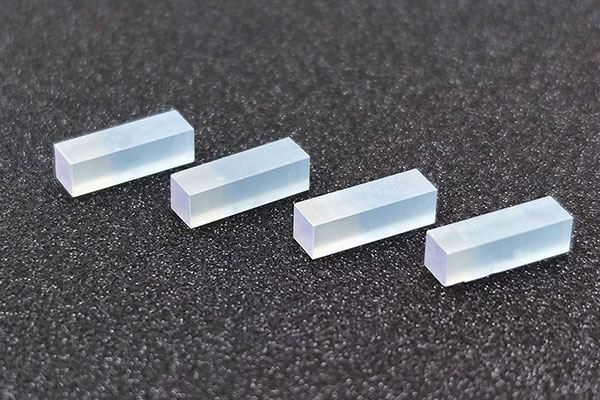
Nd:YVO₄3 (Neodymium-doped Yttrium Orthovanadate) offers excellent performance, but requires careful design.
Nd:YVO₄3 delivers high absorption and gain, making it great for compact, high-frequency laser systems. But it has strict thermal and spectral requirements.
Pros:
- High absorption at pump wavelength
- Large emission cross-section (easy to reach lasing threshold)
- Excellent beam quality
Cons:
Applications:
- Precision marking
- PCB cutting
- High-repetition solid-state lasers
For Nd:YVO₄3 systems, 878.6 nm narrow-spectrum pump sources are critical. This aligns perfectly with the crystal’s absorption peak, reducing quantum defect and thermal lensing.
What About Ultrafast Laser Systems?
When you step into the femtosecond or picosecond regime, traditional Nd-based crystals begin to fall short. That’s where the Ytterbium series shines.
3. Yb:YAG and the Ytterbium Crystal Family
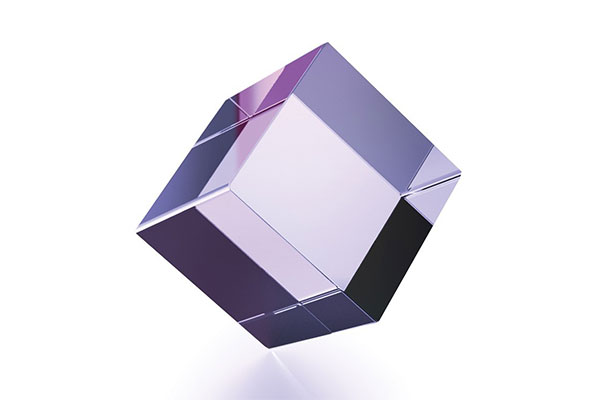
Ytterbium-doped crystals4 are the gold standard for ultrafast laser systems5. Their low quantum defect and high thermal stability are perfect for high peak power.
Advantages:
- Low heat generation
- Small thermal lensing effect
- High beam quality
- Long upper-state lifetime
Common Pump Wavelengths:
- 940 nm
- 969 nm
Applications:
- Femtosecond and picosecond lasers
- Glass cutting and micro-drilling
- Cold processing with minimal heat-affected zones
For system integrators developing high-speed or ultrafast lasers, Yb-based crystals and wavelength-locked pump modules are a must.
Specialty Crystals for Research and Niche Fields
Not all lasers are built for production floors. Some crystals are designed for lab-grade precision and niche applications.
4. Ti:Sapphire6 – The Research Classic
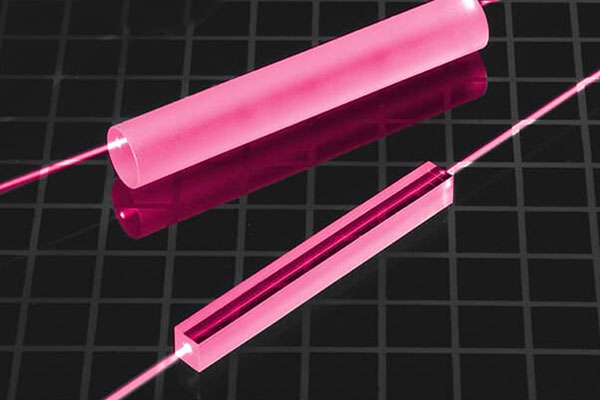
Ti:sapphire (Titanium-doped sapphire) is a staple in research labs for ultrafast optics.
It offers a wide tunable range and can generate extremely short pulses. But it’s expensive and complex, so it’s rarely seen in industry.
Applications:
- Laboratory femtosecond lasers
- Ultrafast spectroscopy
- Optical frequency combs
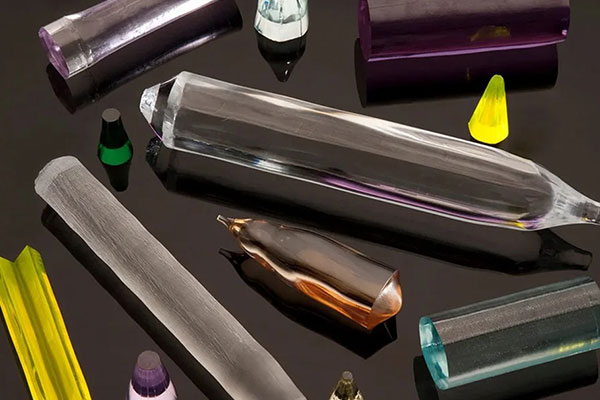
5. Er:YAG, Tm:YAG, Ho:YAG7 – Mid-IR Masters
These crystals are designed for mid-infrared wavelengths, around the 2 μm band.
They’re used in applications where deeper tissue penetration or unique material interactions are needed.
Common Use Cases:
- Medical lasers (dentistry, dermatology, surgery)
- Specialty material processing
- Eye-safe rangefinding
These crystals are often paired with pump sources in the 8xx–9xx nm range, tailored to their specific absorption characteristics.
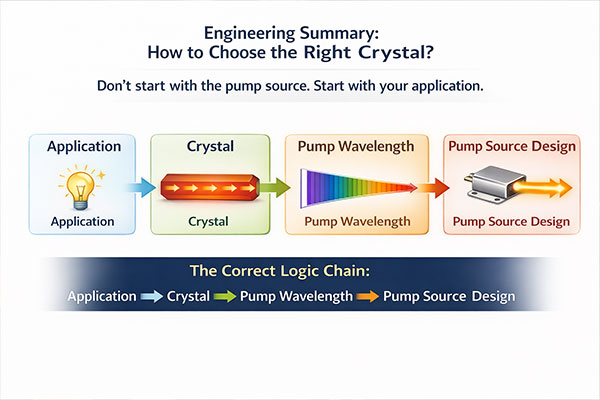
Engineering Summary: How to Choose the Right Crystal?
Don’t start with the pump source. Start with your application.
This is the correct logic chain:
Application → Crystal → Pump Wavelength8 → Pump Source Design
Here’s a quick reference chart:
| Crystal | Common Pump Wavelength8s | Typical Applications9 |
|---|---|---|
| Nd:YAG | 808 / 885 / 888 nm | Marking, cutting, general industrial |
| Nd:YVO₄ | 808 / 878.6 nm | Precision marking, electronics |
| Yb:YAG | 940 / 969 nm | Ultrafast femtosecond & picosecond |
| Ti:Sapphire | Green (532 nm) | Research lasers |
| Er/Tm/Ho:YAG | 8xx–9xx nm | Medical, specialty industrial lasers |
Conclusion
Laser crystals are the heart of any solid-state laser system. Selecting the wrong crystal or mismatching the pump source can lead to inefficient or unstable systems.
Understanding crystals means understanding your laser’s true potential. If you’re unsure which crystal to choose, feel free to consult our expert team at 活力激光.
-
Exploring absorption spectra can enhance your knowledge of laser efficiency and selection. ↩
-
Explore the benefits of Nd:YAG crystals, including their thermal conductivity and mechanical strength, essential for industrial laser applications. ↩ ↩ ↩ ↩ ↩
-
Learn about Nd:YVO₄’s efficiency and design requirements, crucial for understanding its role in high-frequency laser systems. ↩ ↩ ↩ ↩
-
Explore the advantages of Ytterbium-doped crystals to understand their pivotal role in enhancing laser performance. ↩
-
Learn about ultrafast laser systems to discover their innovative applications in various industries. ↩
-
Explore this link to understand the diverse applications of Ti:Sapphire in cutting-edge ultrafast optics research. ↩
-
Discover how these crystals enhance medical laser applications, offering deeper tissue penetration and unique material interactions. ↩
-
Understanding pump wavelengths is crucial for selecting the right laser crystal for your application. ↩ ↩
-
Exploring typical applications helps in choosing the right crystal for specific industrial or research needs. ↩