3D printing sounds futuristic. But not all of it is powered by lasers. The real shift begins where lasers enter.
Lasers are not required in every type of 3D printing, but they are essential for high-precision industrial applications like metal additive manufacturing.
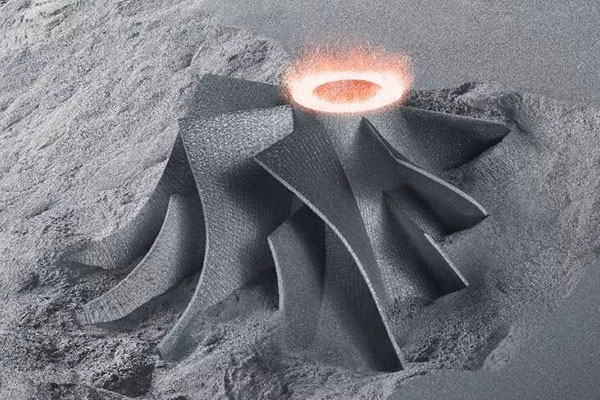
Think 3D printing is all about plastic toys? Think again. The real breakthroughs are happening in factories where lasers shape metals into high-value components.
How Is 3D Printing Classified: Consumer vs. Industrial?
Most people think of 3D printing as a desktop tool. That’s only part of the story.
Consumer 3D printing mainly uses FDM (fused deposition modeling)1, while industrial 3D printing relies heavily on laser-based processes like SLS, SLM, and DMLS.
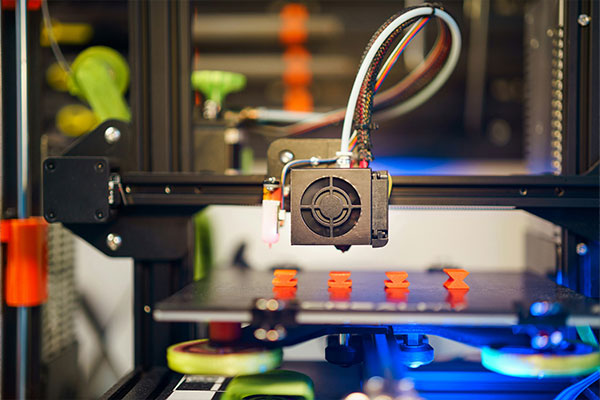
Understanding the Split
| Type | Technology | Materials | Laser Used? |
|---|---|---|---|
| Consumer | FDM | PLA, ABS plastic | No |
| Industrial | SLM, SLS, SLA | Metal, nylon, resin | Yes |
-
FDM1: Melts plastic and deposits layer by layer. Simple, affordable.
-
SLM/DMLS2: Uses lasers to fully melt metal powder. High-end manufacturing.
-
SLS3: Laser sintering of polymers like nylon. Functional prototypes.
-
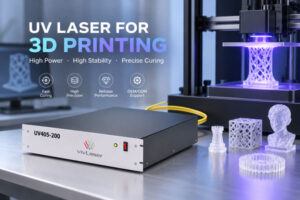
SLA/DLP4: Uses light (often UV laser or LED) to cure liquid resin.
Do All Types of 3D Printers Use Lasers?
The short answer is no.
Only industrial-grade 3D printers for metals and high-performance polymers depend on lasers. Consumer printers mostly use thermal extrusion or LED light curing.
FDM printers dominate the consumer market—they’re cheap and easy to use. But the real manufacturing workhorses use lasers to build functional, high-strength parts. This is the key divide in additive manufacturing5.
Laser involvement signifies a shift from plastic models to precision-built engine parts.
What Are the Most Common Laser-Based 3D Printing Methods?
Industrial additive manufacturing has several core laser-powered techniques.
SLS, SLM, DMLS, and SLA6 are the primary laser-based 3D printing7 technologies used in high-end applications.
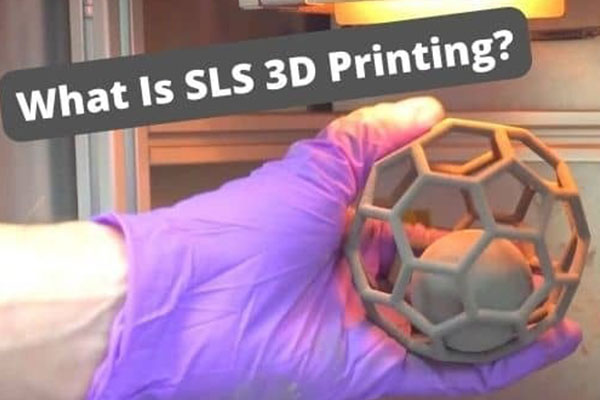
Overview of Laser-Based 3D Printing Methods
| Method | Material | Laser Used | Typical Application |
|---|---|---|---|
| SLS | Nylon, polymers | CO2 | Prototypes, enclosures |
| SLM | Stainless steel, Ti | Fiber | Aerospace, tooling |
| DMLS | Copper alloys | Fiber/Blue | Electronics, conductive parts |
| SLA | Photopolymer | UV laser | Dental, casting, detailed models |
Each technique matches a specific laser type. And when blue lasers enter the picture, new material possibilities open up.
What Types of Lasers Power These 3D Printing Methods?
Not all lasers are created equal.
Each 3D printing method requires a laser with specific characteristics: wavelength, power, beam shape, and efficiency.
CO2 Lasers – For SLS of Plastics
-
Wavelength: 10.6 μm (far infrared)
-
Target: Nylon, TPU
-
Advantage: Wide beam, efficient for sintering
Fiber Lasers – For Metal Melting
-
Wavelength: 1064 nm (near-infrared)
-
High power, stable output
-
Excellent beam quality for fine metal detail
UV Lasers – For Resin Curing
-
Wavelength: 355/405 nm
-
Used in SLA/DLP
-
Enables precise curing of liquid photopolymers
Blue Lasers – For High-Reflective Metals
-
Wavelength: 450 nm
-
Best absorption for copper, gold
-
Up to 65% absorption vs. <5% with infrared
Industry leaders like Tesla and Apple are already exploring blue laser-based additive manufacturing for high-efficiency copper components in electric drivetrains.
Blue lasers are transforming how companies print conductive, high-reflectivity parts—something fiber lasers struggle with.
Why Is Laser Quality Critical in Industrial 3D Printing?
You can’t fake beam quality.
Industrial 3D printing demands laser systems with precise wavelength stability, uniform beam profile, and strong fiber coupling.
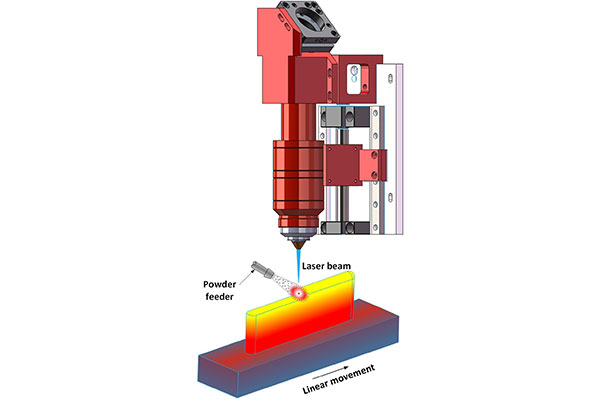
Critical Parameters:
-
Wavelength Stability8: ±0.3 nm is the difference between success and scrap
-
Beam Profile9: Top-hat > Gaussian for even energy distribution
-
Coupling Efficiency: High NA fiber coupling avoids energy loss
Unlike welding or cutting, additive manufacturing requires long-duration, thermally stable beam performance. Even 10 μm of focus drift can destroy a high-value print.
活力激光 integrates advanced anti-contamination optics and real-time temperature monitoring to extend laser lifespan in powder-heavy environments.
Powder contamination and optical damage are silent killers in metal printing. Few suppliers are prepared to solve it at the source.
How Do 活力激光’s Laser Modules Fit These Needs?
Customization isn’t a feature. It’s the new standard.
活力激光 offers application-specific laser modules for metal additive manufacturing, including fiber-coupled infrared and blue diode solutions.
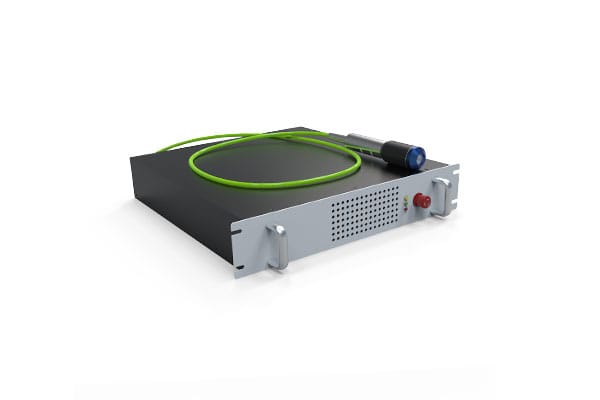
We Build for Integration
-
Customized power ranges (25W~300W)
-
Blue diode modules for copper and aluminum
-
Compact fiber-coupled packaging (105/200/400 μm)
-
OEM-ready cooling, diagnostics, and protocol support (MODBUS/Profinet)
From pump sources to high-power blue modules, 活力激光 delivers more than light. We deliver integration-ready building blocks for the next generation of additive manufacturing.
Conclusion
Laser technology defines the quality and possibility of industrial 3D printing. And 活力激光 is building what the future demands.
-
Explore this link to understand the basics of FDM 3D printing, its advantages, and applications. ↩ ↩
-
Explore this link to understand how SLM/DMLS revolutionizes high-end manufacturing with laser technology. ↩
-
Discover how SLS technology enables the creation of functional prototypes using laser sintering of polymers. ↩
-
Learn about SLA and DLP technologies to discover their unique benefits and how they differ from other methods. ↩
-
Learn about additive manufacturing to grasp its significance in modern production and how it differs from traditional methods. ↩
-
This link will help you understand the differences and specific uses of these key 3D printing methods. ↩
-
Exploring this resource will provide insights into the advantages and applications of laser-based 3D printing technologies. ↩
-
Understanding wavelength stability is crucial for ensuring high-quality prints and minimizing scrap in industrial 3D printing. ↩
-
Exploring beam profile can help you grasp its impact on energy distribution, leading to better print quality and efficiency. ↩